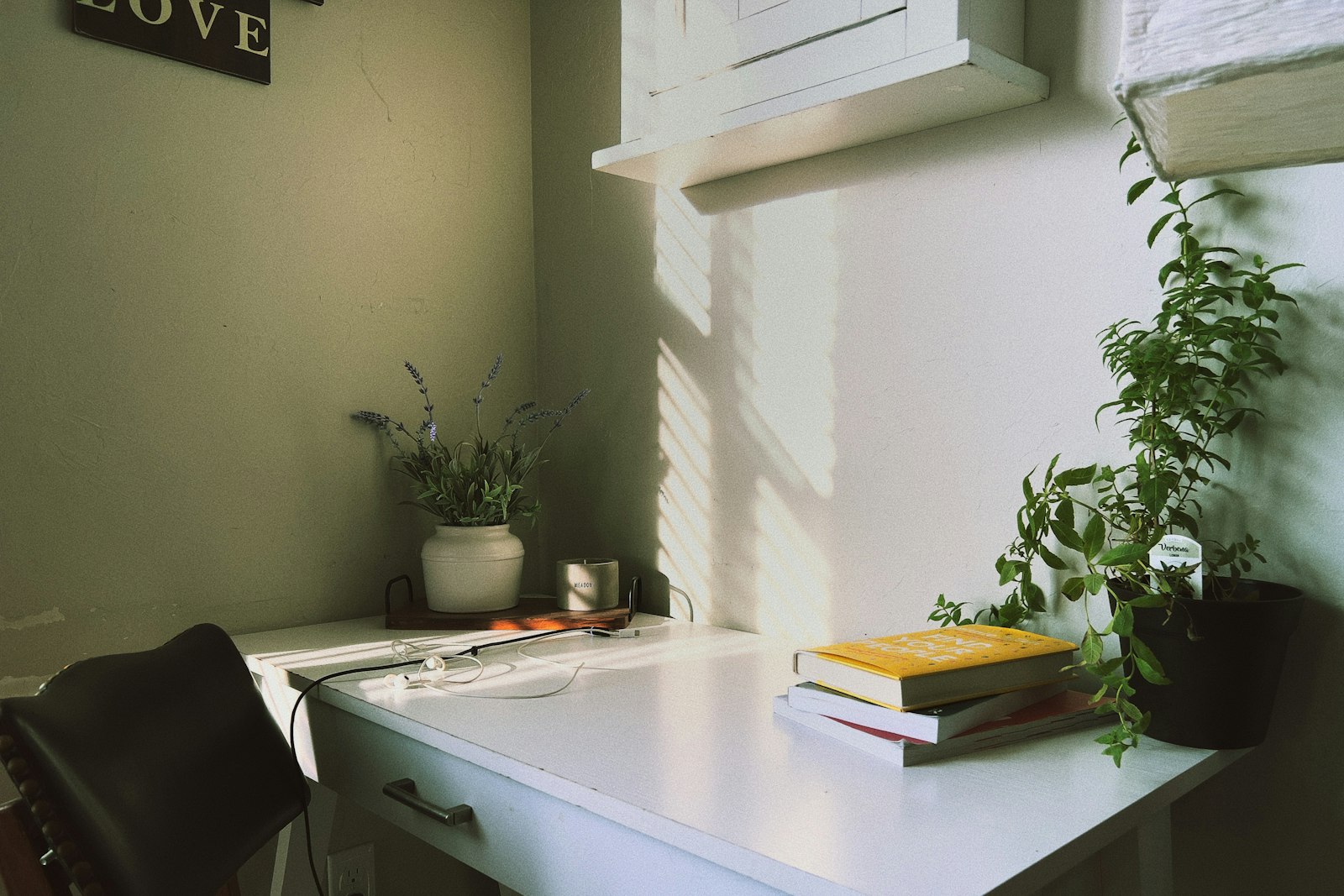
You don’t need a dedicated room. A consistent spot with good light, a comfortable chair and the screen at the right height goes a long way.
Quick takeaways
- A consistent study spot helps signal that it’s time to learn, even if it’s a corner of the kitchen table.
- The American Optometric Association suggests placing the screen slightly below eye level and about 16 to 30 inches away.
- Position the screen so windows and overhead lights don’t create glare.
- Keep supplies, chargers and headphones within reach to cut down on interruptions.
- Use the 20-20-20 rule: every 20 minutes, look at something 20 feet away for 20 seconds.
Learning online works best when your child has a place where school happens. It doesn’t need to be a home office, and it doesn’t need to be expensive. A few choices about where to sit, how to set up the screen and what to keep nearby make online lessons easier for everyone.
Choose the spot
Look for a place that is:
- Consistent. Using the same spot every day helps kids shift into “school mode.”
- Reasonably quiet during lesson times, away from the TV and busy walkways.
- Well lit, ideally with natural light from the side rather than directly behind the screen.
- Easy to supervise for younger children, who usually need an adult within earshot.
A corner of the kitchen table can work as well as a desk in a bedroom. Many families find that keeping schoolwork out of bedrooms makes bedtime easier.
Set up the screen
The American Optometric Association (AOA) offers practical advice for reducing digital eye strain that applies to kids and adults alike:
- Place the screen so the top is slightly below eye level, tilted back a little.
- Keep it about 16 to 30 inches from the eyes.
- Position it to avoid glare from windows and overhead lights. Close blinds if needed.
- Clean the screen of dust and fingerprints.
For a laptop on a table, a stack of sturdy books under the laptop plus a separate keyboard and mouse can bring the screen to a better height.
Helpful tip
Teach the AOA’s 20-20-20 rule: every 20 minutes, look at something 20 feet away for 20 seconds. A sticky note on the edge of the screen is an easy reminder.
Make it comfortable
- Chair: your child’s feet should rest flat on the floor or a footrest, with knees roughly level with hips.
- Table height: forearms should rest comfortably without shoulders hunching. A cushion can raise a child on an adult chair.
- Movement: encourage standing up and stretching between lessons. The AOA also suggests taking longer breaks after extended screen use.
Keep supplies within reach
Interruptions add up. Keep a box or caddy with:
- Pencils, pens, erasers, a ruler and a calculator
- Notebooks and loose paper
- Headphones, ideally with a microphone
- The device charger and a nearby outlet or power strip
- A water bottle
A simple wall calendar or whiteboard with the week’s schedule helps kids see what’s coming.
Reduce distractions
- Keep phones and games out of reach during lessons.
- Turn off notifications on the learning device.
- Agree on household “quiet times” when lessons are live.
Make it theirs
Letting your child choose a few things, like the pencil cup, a plant or a small display of their work, can make the space feel welcoming. Once it’s set up, our guide to a daily routine for online school helps turn the space into a habit, and our tips on staying focused in online classes help during the lessons themselves.
Parents and students ask
Does my child need a separate desk?
Not necessarily. A kitchen or dining table can work well, especially for younger children who need an adult nearby. What matters most is a regular spot with a stable surface and a comfortable seat.
Should the study space be in a bedroom?
It can be, but keeping schoolwork out of the bedroom can make it easier to wind down at night. Shared spaces also make it easier for parents to help with younger children.
What chair height is right?
Aim for feet flat on the floor or on a footrest, knees roughly level with hips and forearms resting comfortably on the table. A cushion or a box under the feet can adapt adult furniture for kids.
How can I reduce noise when siblings study at the same time?
Spread them across different rooms or corners if you can, and use headphones for lessons with audio. A simple shared schedule helps everyone know when quiet time is needed.
This guide is general information for families. Follow your school’s policies, and talk to your child’s teacher, school counselor or pediatrician about your child’s specific needs.